
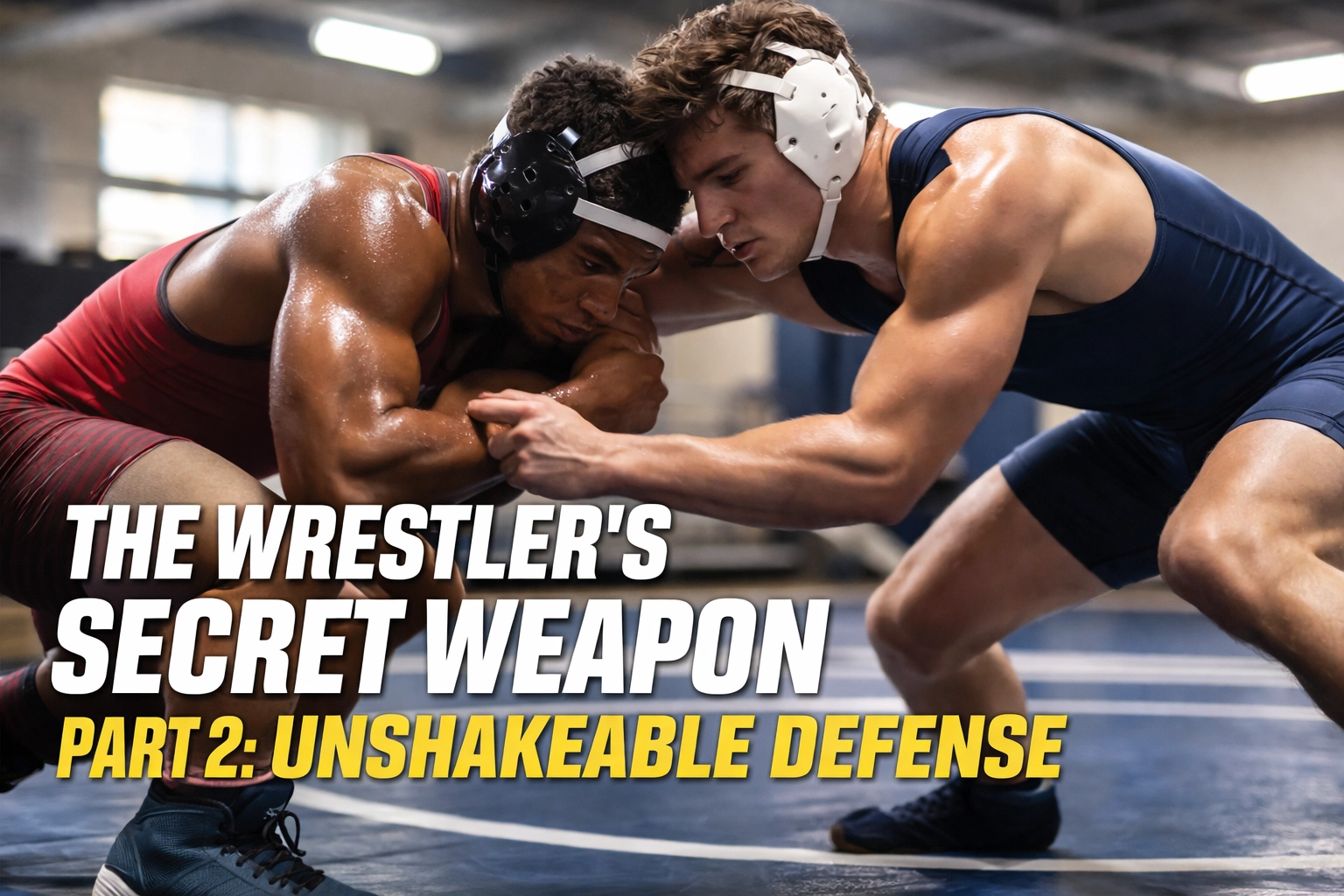
The Wrestler's Secret Weapon Part 2: Unshakeable Defense
Welcome back to The Wrestler's Secret Weapon series. In Part 1, we explored how BJJ hip movement and transitions give young wrestlers the edge in chaotic scramble situations. Now it's time to dig into something that terrifies most wrestlers: but shouldn't.
Being on your back.
In wrestling, ending up underneath your opponent feels like the beginning of the end. Panic sets in. Muscles tense. The pin becomes almost inevitable.
But what if your child could stay calm, technical, and dangerous: even from the bottom?
That's the power of unshakeable defense. And it's exactly what Brazilian Jiu-Jitsu builds.
The Bottom Position Problem
Here in Star Valley, our kids grow up on the wrestling mat. They learn early that getting taken down puts them in danger. Points slip away. Pins loom. Coaches shout instructions that become white noise under the weight of an opponent.
Most wrestlers treat the bottom position as a crisis to escape immediately. They thrash. They bridge wildly. They burn energy at an alarming rate.
And often, they get pinned anyway.
The problem isn't effort. It's mindset.
Wrestling conditions athletes to fear the bottom. BJJ does the opposite. It teaches them to own it.

Why BJJ Athletes Stay Calm When Others Panic
In Brazilian Jiu-Jitsu, being on your back isn't a disaster. It's an opportunity.
The guard position: where you're on your back with your opponent between your legs: is one of the most powerful positions in the entire art. From here, BJJ practitioners launch sweeps, submissions, and reversals. They control distance. They dictate the pace.
When your child trains BJJ, they spend countless hours working from bottom positions. They learn that:
- Being underneath doesn't mean being helpless
- Technique beats panic every single time
- Patience creates opportunities that thrashing destroys
This mental rewiring changes everything.
A wrestler who trains BJJ doesn't freeze when they hit the mat. They don't burn out in thirty seconds of desperate scrambling. Instead, they settle in, protect themselves, and wait for the perfect moment to escape or reverse.
That's unshakeable defense.
The Technical Toolkit: What Your Child Actually Learns
Let's get specific. Here's what BJJ training at Peak BJJ and Kickboxing gives young wrestlers for their defensive arsenal:
Hip Escapes and Shrimping
The hip escape (or "shrimp") is foundational in BJJ. It teaches kids to create space by driving their hips away from an opponent while keeping their shoulders relatively still.
In wrestling terms? This movement is gold for escaping bottom positions without exposing your back to the mat. Your child learns to slip out from underneath heavy pressure without giving up pin-worthy positions.
Frame Defense
BJJ emphasizes using your skeletal structure: not muscle: to create barriers between you and your opponent. Elbows tight. Hands positioned on hips and shoulders. Creating walls that opponents can't collapse.
This concept directly applies to preventing the crossface and breakdown techniques wrestlers use to flatten opponents for the pin. Strong frames buy time and create escape windows.
The Guard Recovery
When a BJJ practitioner gets passed, they don't give up. They immediately work to recover guard: getting their legs and hips back between themselves and their opponent.
For wrestlers, this translates to staying on their side, keeping their hips active, and never letting an opponent settle into a dominant pinning position. The constant movement and repositioning make securing a pin incredibly frustrating.

Grip Fighting and Hand Control
BJJ athletes obsess over grips. They know that controlling hands means controlling outcomes.
In wrestling, this awareness helps kids fight off wrist control, break grips around their waist, and prevent opponents from securing the holds they need for pins. It's proactive defense: stopping attacks before they develop.
The Grit Factor: Forging Mental Toughness
Technical skills matter. But the real transformation happens between the ears.
BJJ training builds what we call mat grit: the mental toughness to stay composed when everything feels like it's falling apart.
Here's how it works:
Every BJJ class, your child will find themselves in uncomfortable positions. Heavier training partners will apply pressure. Submissions will threaten. Escapes will seem impossible.
And then they'll learn to breathe. To think. To problem-solve under pressure.
This happens over and over, class after class. The discomfort becomes familiar. The panic response fades. What replaces it is something invaluable:
Calm confidence in chaos.
When your wrestler hits the mat in a match, that training kicks in automatically. Their heart rate stays manageable. Their breathing stays controlled. Their mind stays sharp enough to execute technique instead of flailing.
This is the confidence that makes champions. And it's built one uncomfortable training session at a time.
From the BJJ Mat to the Wrestling Mat
Let's paint a picture of how this plays out in competition.
Your child shoots for a takedown. Their opponent sprawls hard and starts working for the breakdown. In the past, this might have been the beginning of the end: panic, exhaustion, and eventually shoulders on the mat.
But now?
Your wrestler stays calm. They protect their neck and secure strong frames. When their opponent tries to turn them, they use hip movement to stay on their side. They feel for grips and break them before they become dangerous.
Their opponent works harder and harder. Burns more and more energy. Gets increasingly frustrated.
Meanwhile, your child waits. Conserves energy. Looks for the moment to hit that sit-out or switch they've drilled a thousand times.
The escape comes. They're back to neutral. And their opponent is gassed while your wrestler is barely breathing hard.
That's the power of unshakeable defense.

Building These Skills at Peak BJJ and Kickboxing
At Peak BJJ and Kickboxing, we understand Star Valley's wrestling culture. Many of our young athletes compete on school wrestling teams and train BJJ to gain a competitive edge.
Our kids' programs emphasize:
- Positional awareness : Understanding where you are and what your options look like
- Controlled drilling : Building muscle memory for defensive movements
- Live sparring : Pressure-testing skills against resisting partners
- Mental conditioning : Learning to stay calm and think clearly under stress
We don't replace wrestling. We enhance it.
The defensive skills your child builds on our mats transfer directly to wrestling competition. They become harder to pin, harder to control, and harder to break mentally.
The Confidence That Carries Over
Here's something parents tell us all the time: their kids carry themselves differently after training BJJ.
It's not arrogance. It's quiet confidence. The knowledge that they can handle pressure. That uncomfortable situations don't have to become disasters. That they have tools and the composure to use them.
This confidence shows up on the wrestling mat. It shows up in the classroom. It shows up in social situations.
When your child knows they can survive and thrive under physical pressure from a resisting opponent, everything else feels more manageable.
That's the gift of unshakeable defense. It's not just about avoiding pins. It's about building the kind of grit and self-belief that shapes character for life.
Ready for Part 3?
In the final installment of The Wrestler's Secret Weapon series, we'll explore The Strategic Edge: how BJJ's problem-solving approach develops wrestling IQ and gives your child the mental tools to outthink opponents, not just outwork them.
Forge Unshakeable Defense
Star Valley wrestlers deserve every advantage. Cross-training in Brazilian Jiu-Jitsu builds the calm, technical, mentally tough athletes who thrive in bad positions instead of panicking.
If you're ready to give your young wrestler the defensive edge they need, visit us at Peak BJJ and Kickboxing. We'd love to show you how our programs complement wrestling and build champions on and off the mat.
Stay calm. Stay technical. Stay dangerous.