
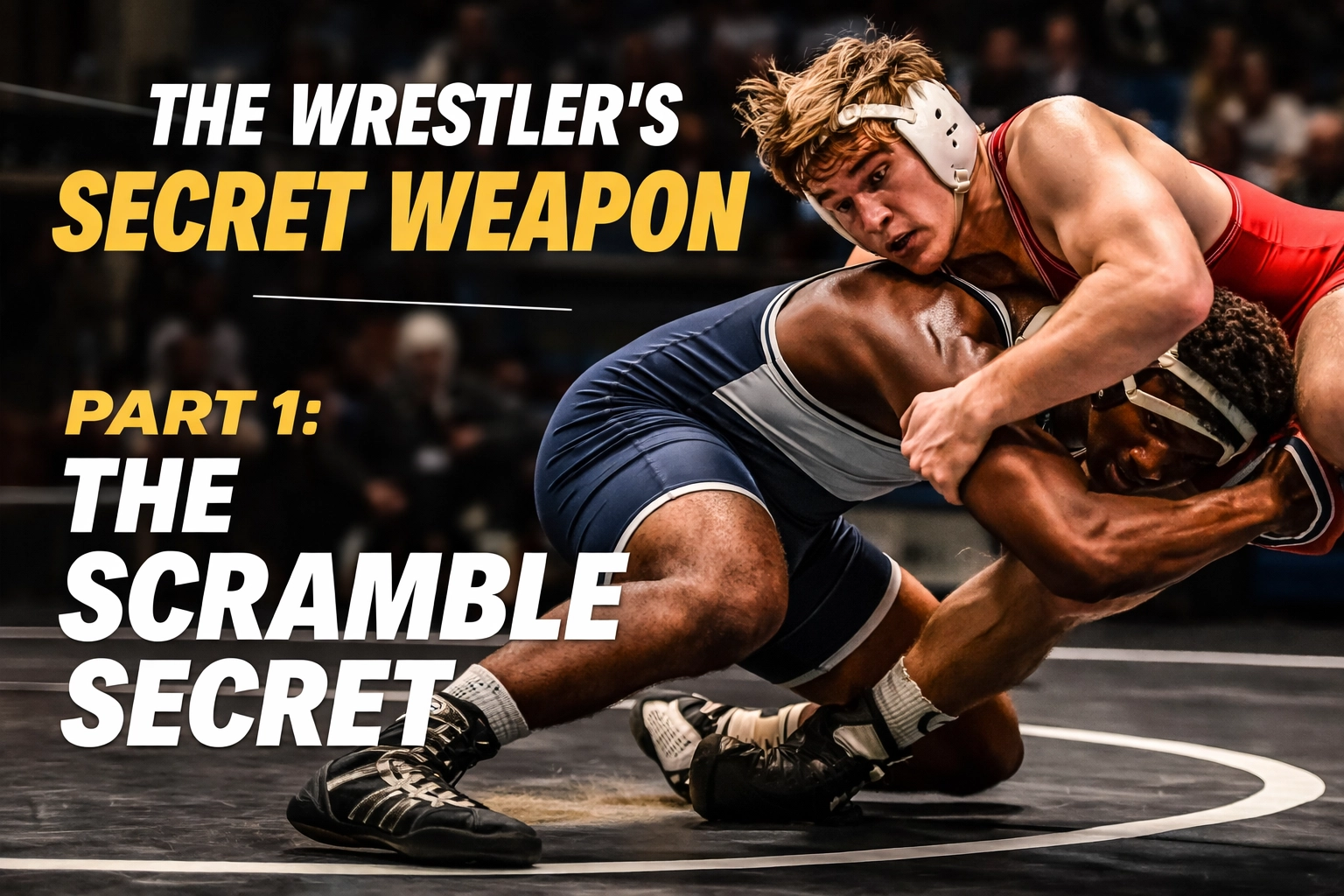
The Wrestler's Secret Weapon Part 1: The Scramble Secret
Your kid sprawls hard. The opponent scrambles. Bodies tangle. And in three chaotic seconds, the match is decided.
If you've watched your young wrestler compete, you've seen it happen. Those wild, explosive moments where technique seems to fly out the window and pure instinct takes over. These moments have a name in wrestling circles: scrambles.
And here's what most Star Valley wrestling parents don't realize: the kids who consistently win these scrambles aren't just lucky. They're not just faster or stronger. They've developed a specific set of skills that most traditional wrestling programs barely touch.
That's where Brazilian Jiu-Jitsu enters the picture.
Welcome to Part 1 of our "Wrestler's Secret Weapon" series. Today, we're unlocking The Scramble Secret: and showing you exactly how BJJ training gives young wrestlers an unfair advantage when chaos breaks out on the mat.
What Exactly Is a Scramble?
Let's break it down simply.
A scramble occurs when both wrestlers lose or exchange control and must react quickly to regain dominant position. Think of it as organized chaos: a sudden transition where neither athlete has a clear advantage, and the first one to find their footing wins.
Scrambles happen constantly in youth wrestling:
- After a failed takedown attempt
- During a sprawl when both wrestlers hit the mat
- When a pin attempt gets defended and positions get tangled
- Any time a reversal is in progress
Here's the truth that experienced coaches understand: scrambles decide matches. A single scramble can lead to a takedown, reversal, or escape that completely shifts the momentum of a bout. The wrestler who wins the scramble often scores even when their initial attack fails.
This ability to turn chaotic moments into scoring opportunities? It separates the elite competitors from everyone else.

Why Most Wrestlers Struggle in Scrambles
Watch any youth wrestling tournament, and you'll spot a pattern.
When scrambles break out, most kids do one of two things: they either freeze up, unsure of what to do next, or they burn all their energy muscling through the chaos with zero technique.
Both approaches fail.
The real advantage in scrambles lies in composure. Panic leads to poor decisions. Calm, purposeful movement creates scoring opportunities.
But here's the problem: traditional wrestling practice spends most of its time on set techniques from controlled positions. Takedowns from neutral. Escapes from referee's position. Pinning combinations from top.
Those skills matter. But scrambles? They're messy. They're unpredictable. And they're hard to drill in a traditional wrestling room.
That's exactly why BJJ becomes a wrestler's secret weapon.
The BJJ Advantage: Three Skills That Dominate Scrambles
Brazilian Jiu-Jitsu is essentially an entire martial art built around what happens when bodies get tangled on the ground. While wrestling focuses heavily on takedowns and pins, BJJ lives in the transitions: the exact space where scrambles happen.
Here are the three core skills BJJ develops that directly translate to scramble dominance:
1. Hip Movement and Mobility
In BJJ, we say "the hips don't lie." Your hips control your position on the ground. Period.
BJJ training drills hip escapes (we call them "shrimps"), hip switches, and constant hip repositioning hundreds of times per class. Kids who train BJJ develop an almost instinctive ability to move their hips independently from their upper body: a skill that's absolutely crucial during scrambles.
When your child can move their hips fluidly while their upper body is engaged with an opponent, they can:
- Recover position faster when they're in trouble
- Create angles that their opponent can't match
- Stay mobile instead of getting stuck underneath
This hip awareness becomes automatic. And in the split-second chaos of a scramble, automatic wins every time.

2. Body Awareness in Uncomfortable Positions
Here's something that surprises most wrestling parents: BJJ practitioners spend a LOT of time in "bad" positions.
We train from bottom mount. We drill escapes from side control. We practice recovering guard when someone is smashing us flat.
Why does this matter for wrestling?
Because scrambles put your child in awkward, uncomfortable, unfamiliar positions constantly. The wrestler who panics in those positions loses. The wrestler who stays calm: who recognizes what's happening and knows how to move: wins.
BJJ builds comfort in discomfort. Your child learns to think clearly when they're on their back, when they're getting pressured, when everything feels like it's going wrong. That mental composure transfers directly to the wrestling mat.
3. Transitional Thinking
Traditional wrestling often teaches techniques as isolated skills. "Here's how you do a double leg." "Here's how you escape bottom."
BJJ teaches in chains and flows.
Every position connects to the next. Every technique has five follow-ups depending on how your opponent reacts. Kids who train BJJ learn to think three moves ahead: "If they do this, I go here. If they defend that, I switch to this."
This transitional thinking is EXACTLY what wins scrambles.
Scrambles are essentially rapid-fire position changes. The athlete who can flow from position to position, adapting in real-time to their opponent's movements, comes out on top. BJJ wires this pattern recognition into your child's brain through countless hours of live rolling (sparring).

How Star Valley Wrestlers Gain the Edge at Peak BJJ and Kickboxing
We get it. Star Valley lives and breathes wrestling. Your family's schedule already revolves around wrestling practice, tournaments, and off-season camps.
So why add BJJ to the mix?
Because smart wrestlers: and smart wrestling families: understand that cross-training creates complete athletes.
At Peak BJJ and Kickboxing, we've seen it happen over and over. Young wrestlers walk through our doors, skeptical at first, and within weeks their coaches start noticing something different about their scrambling ability. Their movement gets smoother. Their reactions get faster. They stop panicking in bad positions.
Our Junior Warriors program (ages 8-13) and Tiny Tough Kids program (ages 4-7) are designed to build these foundational movement skills in a fun, engaging environment. We're not trying to turn your wrestler into a BJJ competitor (unless they want to be). We're giving them tools that make them better at the sport they already love.
Here's what our programs focus on for young wrestlers:
- Hip escape drills that build the mobility scrambles demand
- Position recognition training so they know where they are even in chaos
- Live rolling that teaches real-time problem-solving under pressure
- Composure development through controlled sparring scenarios
The result? Your child walks back into the wrestling room with movement patterns their teammates don't have. They develop an instinct for scrambles that feels almost unfair to their opponents.
Forge the Scramble Advantage
Scrambles will always be part of wrestling. The chaotic, explosive moments that decide matches aren't going away.
The question is simple: will your child be the one who freezes in those moments, or the one who thrives?
BJJ training builds the hip movement, body awareness, and transitional thinking that turns scramble chaos into scoring opportunities. It gives young wrestlers a toolkit that most of their opponents simply don't have.
Ready to give your wrestler the scramble secret?
Visit Peak BJJ and Kickboxing to learn more about our Junior Warriors and Tiny Tough Kids programs. Join our tribe and watch your young wrestler transform from someone who survives scrambles into someone who dominates them.
Coming up in Part 2: "Unshakeable Defense": how BJJ teaches kids to be comfortable in "bad" positions, making them nearly impossible to pin. Stay tuned.