
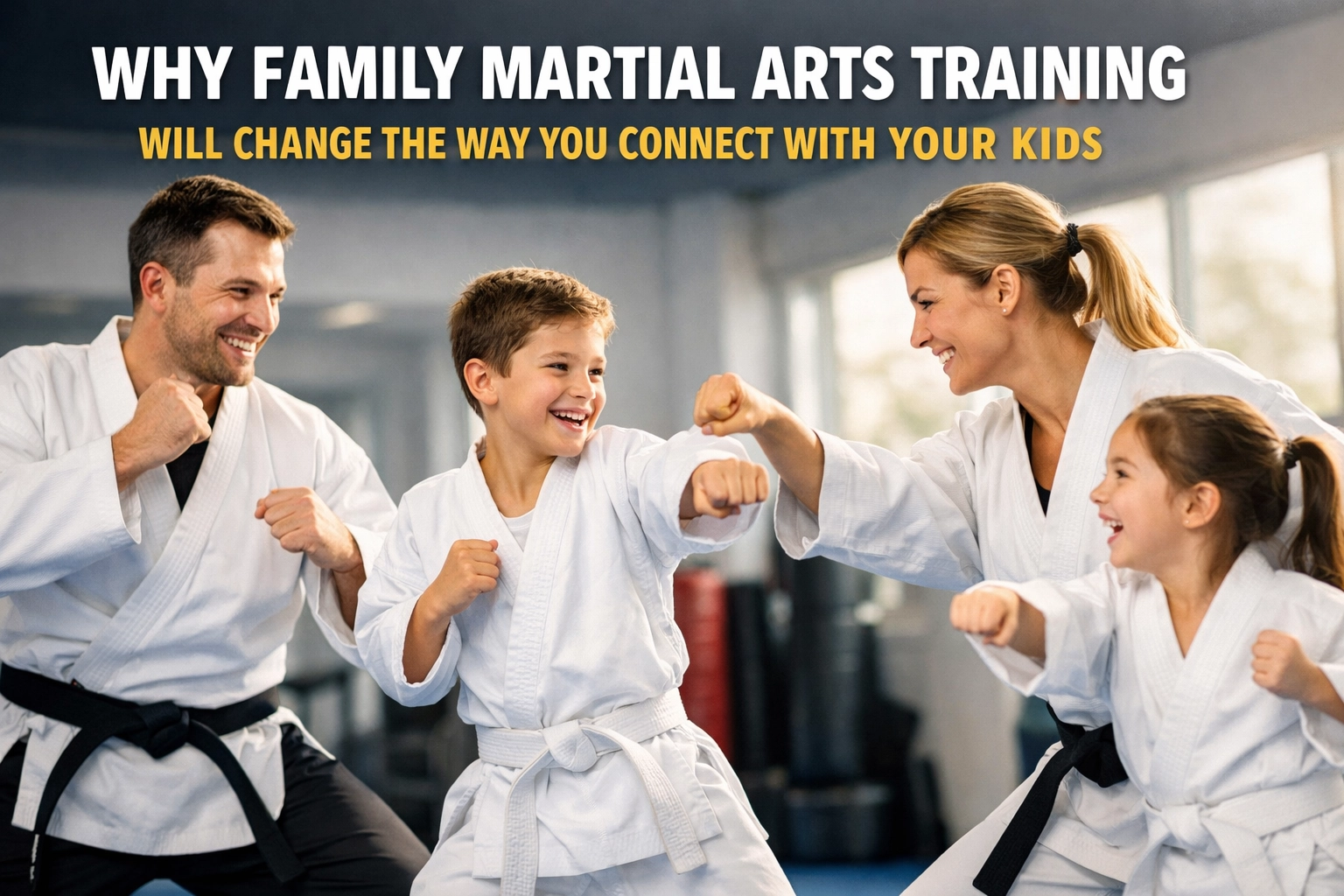
Why Family Martial Arts Training Will Change the Way You Connect With Your Kids
You watch your kids from the sidelines. You cheer at games. You applaud at recitals. You're present, but you're not in it with them.
Family martial arts training flips that dynamic completely.
When you step onto the mats together at Peak BJJ and Kickboxing, you're not just supporting your child's journey, you're living it alongside them. You're sweating through the same drills. You're struggling with the same techniques. You're celebrating the same small victories that come from finally nailing that escape you've been working on for weeks.
This shared experience creates a connection that goes deeper than any carpool conversation ever could.
Quality Time That Actually Means Something
Let's be honest: most "family time" is passive. Movie nights. Dinner at a restaurant. Scrolling through phones in the same room.
The mat changes everything.

At Peak BJJ and Kickboxing, you and your kids are mentally and physically engaged in the same challenge. You're learning the same hip escapes. You're drilling the same guard passes. You're both trying to remember whether it's hook, underhook, then frame, or was it frame first?
This isn't parallel play. This is genuine partnership.
The beauty of training together is that the mat doesn't care who's the parent and who's the kid. When you're both white belts trying to figure out how to shrimp properly, you're equals. When your 10-year-old remembers the sequence better than you do and walks you through it, the respect flows both ways.
You're not teaching at them. You're learning with them.
And that shared struggle? That's where real connection happens.
Speaking the Same Language
After a few months of training together, something incredible happens: your family develops its own language.
You start seeing everything through a BJJ lens.
Someone's having a tough day at school? "You've got this, just like when you were stuck in side control and found that escape."
Family conflict brewing? "Let's reset. Take a breath. Think about what Coach always says about staying calm under pressure."
Kid frustrated with homework? "Remember when you couldn't do that armbar? Now look at you. This is the same thing."

This shared vocabulary of discipline, persistence, and respect becomes the foundation of how your family communicates. You're not just talking about values: you're actively practicing them together, then carrying them home.
Watching Each Other's Real Growth
Here's what changes everything: you don't just hear about your kid's progress. You see it. You feel it.
You're on the mat when they finally nail that technique they've been struggling with. You're there when they tap for the first time and have to manage that ego hit. You're there when they push through exhaustion during a tough roll and come out stronger.
And here's the flip side that most parents don't expect: your kids watch you struggle too.
They see you get frustrated when a technique doesn't click. They see you get tapped by someone half your size. They see you come back the next class anyway.

This reciprocal visibility is powerful. Your kids learn that growth isn't linear. That adults face challenges too. That showing up even when it's hard is what matters most.
You're not just telling them about resilience: you're modeling it in real-time, right next to them on the mat.
The Power of Mutual Encouragement
Something magical happens when families train together: the traditional parent-child hierarchy softens into something more collaborative.
Your kids cheer you on during conditioning. You offer them tips after rolling. Siblings encourage each other through tough drills. Everyone celebrates belt promotions together: not as spectators, but as teammates who understand exactly what that achievement represents.
This mutual support system creates a family culture of encouragement that extends far beyond the gym. When everyone in the family knows what it feels like to face a challenge, overcome a setback, and push for progress, empathy becomes your default setting.
You stop saying "it's not that hard" because you remember when everything felt hard when you started.
Your kids stop saying "you don't understand" because they literally watched you go through the same struggles.
Facing Fear as a Family Unit
BJJ is uncomfortable. There's no way around it.
You're going to feel claustrophobic under side control. You're going to feel vulnerable attempting a new technique in front of everyone. You're going to feel intimidated rolling with someone more experienced.
But when your family faces these fears together, something shifts.
Your 8-year-old sees you nervous before your first roll. Your teenager watches you push through anyway. You both learn that courage isn't the absence of fear: it's action in spite of it.

These shared moments of vulnerability create intimacy that you simply can't manufacture in everyday life. When you've both been scared on the mat, when you've both pushed past that fear, when you've both survived and grown stronger: that becomes your family story.
And that story shapes everything.
Building a Culture of Accountability
Training together creates natural accountability systems that feel collaborative rather than controlling.
When everyone in the family commits to showing up twice a week, you're not nagging your kid to go: you're all going together. When your teenager wants to skip class because they're tired, your 10-year-old reminds them that "we don't quit when it gets hard."
The discipline required for martial arts training becomes a shared family value rather than a parent-imposed rule.
You're not forcing your kids to be disciplined. You're all choosing discipline together, supporting each other through the days when motivation is low and showing up feels impossible.
This collaborative accountability extends to goal-setting too. When your family sits down to talk about belt progression, competition goals, or technique focus, everyone has input. Everyone has stakes. Everyone has skin in the game.
The Connection You Didn't Know You Were Missing
Most parents don't realize what they're missing until they experience it.
You think you're connected to your kids because you live in the same house, eat dinner together, and ask about their day. But there's a depth of connection that only comes from shared challenge, mutual vulnerability, and collaborative growth.
Training together at Peak BJJ and Kickboxing gives you that depth.
You're not just raising kids. You're growing alongside them.
You're not just teaching values. You're practicing them together.
You're not just spending time together. You're building something together: skill, character, resilience, and a bond that can weather anything life throws at you.
Because when you've survived rounds together on the mat, when you've celebrated each other's victories and encouraged each other through defeats, when you've built a common language of discipline and respect: you're not just a family anymore.
You're a team.
Ready to Transform Your Family Connection?
The mat is waiting. Your family's journey starts with a single class.
At Peak BJJ and Kickboxing, we see families transform every day. Parents who thought they were "too old" or "too out of shape" discover they're capable of far more than they imagined. Kids who thought martial arts was just about fighting learn it's about character, community, and connection.
And families who step onto the mat together? They find something they didn't even know they were looking for.
Stop watching from the sidelines. Start living the journey with your kids.
Visit Peak BJJ and Kickboxing and discover what happens when your family steps onto the mat together. Your connection will never be the same.